
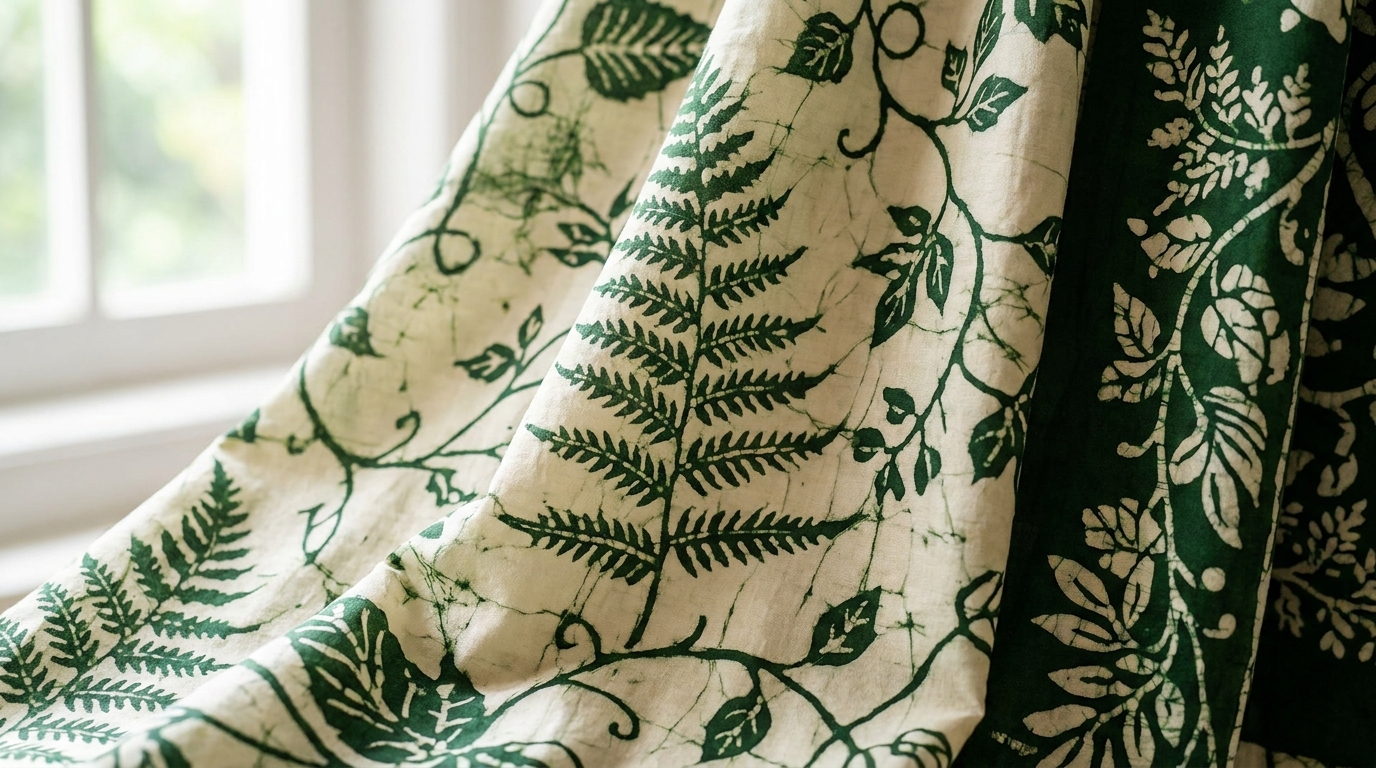
Thirty-Nine Years of Wax and Patience
Sri Batik began in 1987 in a back room in Kandy, with one copper pot, a borrowed tjanting pen, and a woman named Kusum who refused to let a craft die quietly.
The Heritage of Sri Lankan Batik
Batik came to Sri Lanka by sea, carried from Java on trading routes centuries old, and it took root here in a form of its own — heavier cloth, deeper greens, motifs drawn from temple murals rather than court gardens. By the 1980s the trade was collapsing under cheap screen-printed imitations. Kusum kept working because she could not make herself stop.
Her daughter runs the dye house now. There are forty-two families on the books, three vats that have never been emptied, and a rule nobody wrote down: nothing leaves unless the person who made it will put their name to it.
We have not modernised the craft. We have only made it possible to buy directly from the people who practise it, which turns out to be the part that was actually broken.
“Nothing leaves our dye house unless the person who made it will proudly put their name to it.”
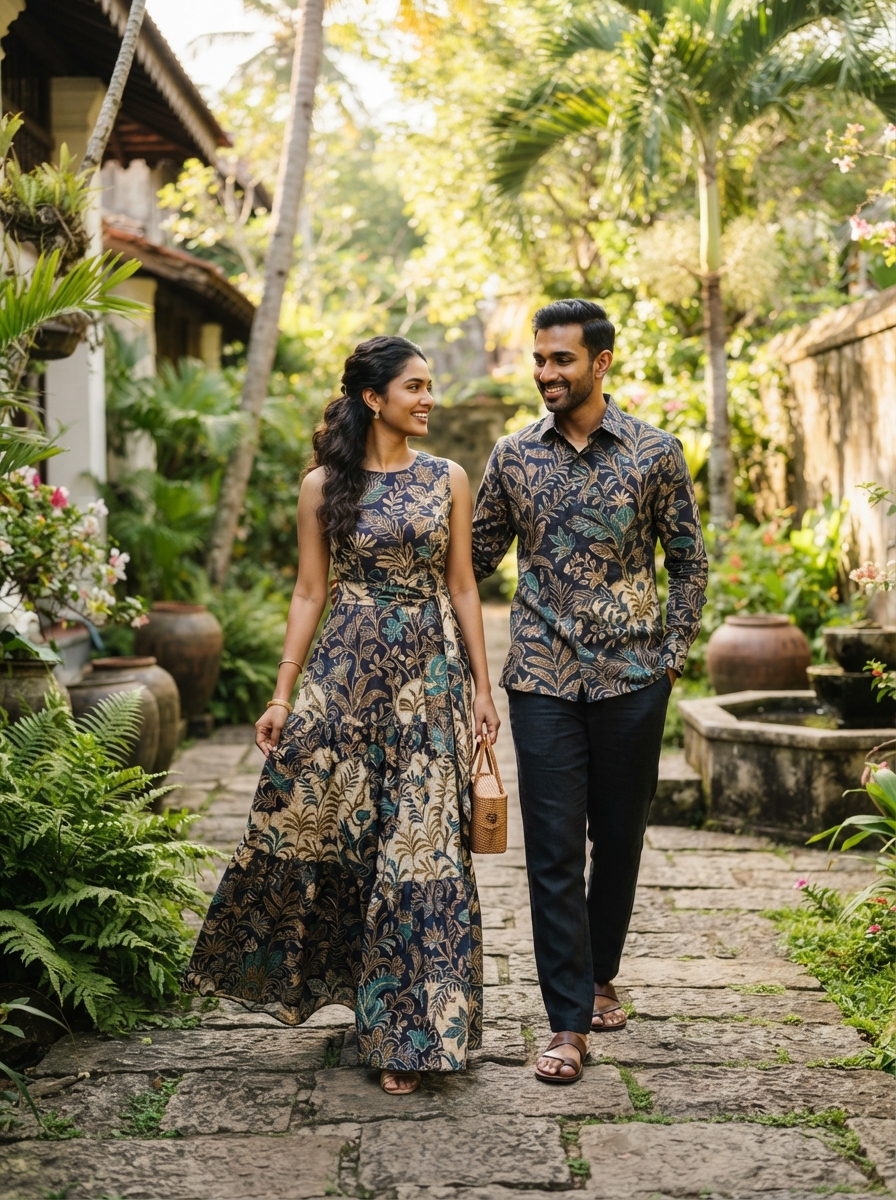
Each piece carries the signature seal of its creator.
What We Hold To
Guiding principles handed down through generations of master dyers.
Hand, Never Machine
Every motif is drawn with a tjanting pen or stamped with a hand-cut block. We do not screen-print and we do not call printed cloth batik.
Dyes You Could Eat
Indigo, madder root, cutch bark, pomegranate rind. Spent dye baths go to the garden rather than the drain, because they can.
Paid Before We Are
Artisans are paid on completion, not on sale. The risk of an unsold batch sits with us, which is where it belongs.
The Alchemy of Handcrafted Batik
From virgin cotton and sun-bleached linen to living heirlooms.
The Drawing
A motif is chosen from the archive or drawn fresh, then traced onto washed and sun-bleached cloth in charcoal.
The Wax
Molten beeswax and paraffin are laid over everything that must stay pale. The pen cannot be lifted mid-line without leaving a mark.
The Vat
The cloth is dipped, lifted, and left to oxidise in shade — green to blue in the open air. Repeat for depth, re-wax between colours.
The Boil & Selvedge
Wax is boiled away and skimmed for reuse. The signature crackle appears. The master maker inspects and signs the selvedge.
1987
Founded in Kandy
42+
Artisan Families
11
Days Per Piece
100%
Pure Botanical Dyes
Experience the Art of Living Heritage
Each limited run represents weeks of patience and authentic artisan craftsmanship. Own a piece of Sri Lankan living heritage.